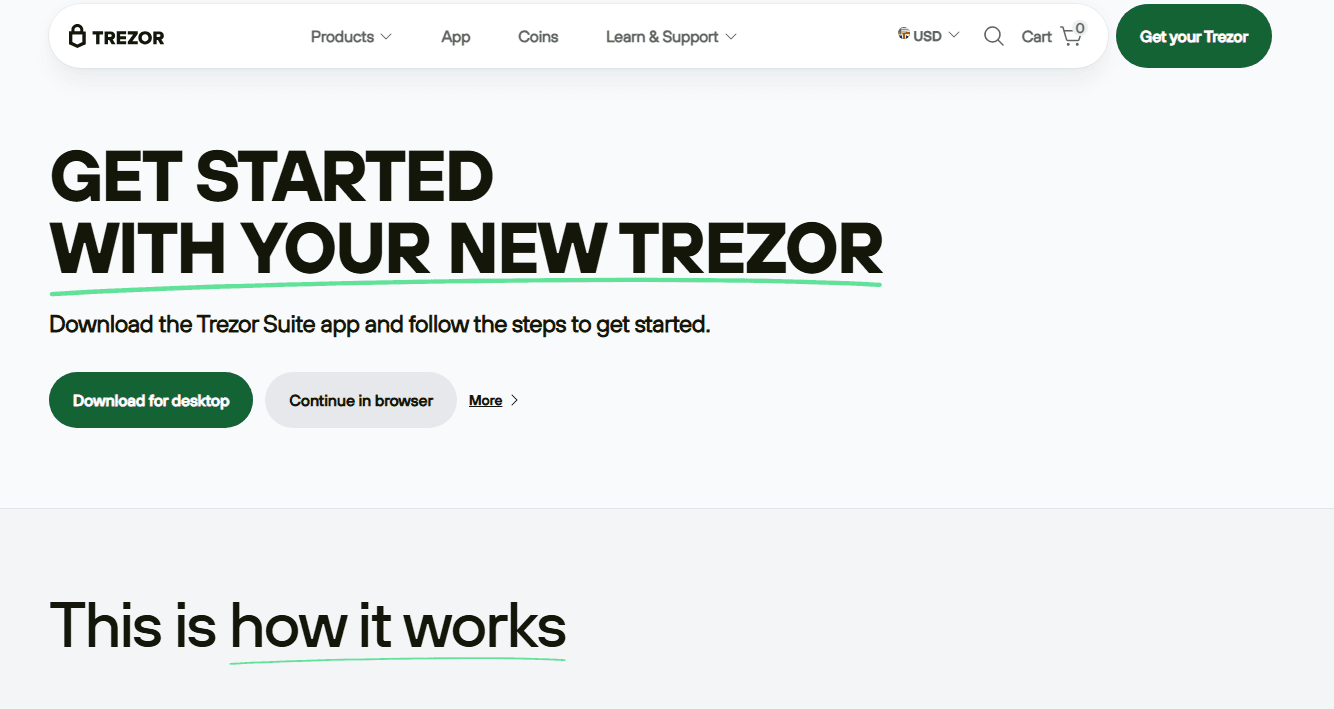
Trezor.io/start: The Ultimate Guide to Setting Up Your Cryptocurrency Wallet
Cryptocurrency has revolutionized the way we think about money, offering decentralized, borderless, and secure ways to store and transfer value. However, the freedom of owning crypto comes with a significant responsibility: you are in full control of your funds, and that includes protecting them. Unlike traditional banks, if you lose access to your crypto wallet or your private keys are stolen, there is no central authority to recover your assets.
This is where Trezor hardware wallets shine. By keeping private keys offline, Trezor wallets offer unmatched security against hacking and malware. But owning a Trezor wallet is only the first step. Setting it up correctly is crucial to safeguarding your funds. That’s why Trezor provides Trezor.io/start, the official setup portal for initializing your wallet safely.
This guide covers everything you need to know about Trezor.io/start—from setup to security, transactions, portfolio management, and advanced features—so you can confidently manage your crypto assets.
What is Trezor.io/start?
Trezor.io/start is the official online gateway for initializing Trezor hardware wallets. It ensures users follow a secure, step-by-step process when setting up their device.
The platform helps users:
Connect their Trezor wallet to a computer safely.
Download and install Trezor Suite, the wallet management software.
Create a strong PIN and safely record a recovery seed.
Verify the authenticity of their Trezor device to prevent fraud.
By starting here, you can avoid phishing sites, malicious software, and other common threats that target cryptocurrency users.
Why Use Trezor.io/start?
Setting up a hardware wallet incorrectly can put your crypto at risk. Trezor.io/start is essential because it provides:
Verified Setup Instructions – Ensures your wallet is initialized safely.
Official Software Downloads – Direct links to Trezor Suite to prevent malware.
Recovery Seed Guidance – Teaches you how to securely store your seed offline.
Device Verification – Confirms your Trezor hardware is genuine and untampered.
Starting with Trezor.io/start gives you confidence and peace of mind from the very first step.
Trezor Wallet Models Supported
Trezor.io/start works with both main Trezor wallet models:
Trezor One
Simple and reliable.
Physical buttons for navigation.
Supports major cryptocurrencies.
Beginner-friendly.
Trezor Model T
Advanced model with touchscreen interface.
Supports additional cryptocurrencies and tokens.
Enhanced security features.
Ideal for advanced users and active traders.
Both models store private keys offline, ensuring your assets remain protected even if your computer is compromised.
Step-by-Step Wallet Setup
Trezor.io/start guides users through wallet setup to make sure it’s secure and ready to use.
Step 1: Verify Your Device
Before connecting your Trezor:
Check packaging for tampering or damage.
Ensure all accessories (USB cable, manuals) are included.
Follow Trezor.io/start instructions to verify your device’s authenticity.
Step 2: Install Trezor Suite
Visit Trezor.io/start.
Download Trezor Suite for your operating system (Windows, macOS, Linux).
Follow installation instructions carefully.
Security Tip: Always download Trezor Suite from the official website to avoid malware.
Step 3: Connect Your Trezor Device
Use the supplied USB cable to connect the wallet to your computer.
Open Trezor Suite; the software will detect your device automatically.
Step 4: Initialize Your Wallet
Trezor.io/start will guide you to:
Create a new wallet or restore an existing one using a recovery seed.
Set a strong PIN to protect against unauthorized access.
Record your recovery seed (12, 18, or 24 words) offline in a secure place.
Step 5: Confirm Your Recovery Seed
Trezor will ask you to confirm your recovery seed by selecting words in order on the device.
This ensures the backup is correct and can restore your wallet if the device is lost or damaged.
Logging Into Trezor Suite
After setup:
Open Trezor Suite.
Connect your Trezor device via USB.
Enter your PIN on the device.
Confirm the wallet is recognized.
Now your wallet is ready to send, receive, and manage cryptocurrencies securely.
Key Security Features
Trezor.io/start emphasizes multiple layers of security:
Offline Private Key Storage – Keys never leave the device.
PIN Protection – Prevents unauthorized access.
Optional Passphrase – Adds an additional security layer.
Physical Confirmation – Every transaction must be approved on the device.
Firmware Verification – Ensures the device runs official software.
These features make Trezor one of the safest ways to store cryptocurrency.
Supported Cryptocurrencies
Trezor wallets support hundreds of cryptocurrencies, including:
Bitcoin (BTC)
Ethereum (ETH) and ERC-20 tokens
Litecoin (LTC)
Bitcoin Cash (BCH)
Dash (DASH)
Zcash (ZEC)
Integration with DeFi platforms enables users to interact with decentralized applications safely.
Sending and Receiving Cryptocurrency
Sending Funds
Open Trezor Suite and select the account to send from.
Enter the recipient’s address and amount.
Verify transaction details on your device.
Confirm to broadcast the transaction.
Receiving Funds
Generate a receive address in Trezor Suite.
Confirm the address on your device.
Share the verified address with the sender.
Device verification ensures that malware cannot manipulate addresses or amounts.
Portfolio Management
Trezor Suite provides tools to manage your cryptocurrency efficiently:
Real-Time Balances – Monitor your holdings instantly.
Performance Tracking – View historical performance and allocation.
Multi-Account Management – Organize wallets for different purposes, such as personal, business, or investment.
This makes managing multiple assets simple and secure.
Advanced Features
Token Swaps – Exchange cryptocurrencies directly in Trezor Suite.
DeFi Access – Safely interact with decentralized applications.
Custom Transaction Fees – Adjust fees for speed or cost optimization.
Multi-Account Organization – Separate wallets for different financial goals.
These features allow both beginners and advanced users to manage crypto efficiently without compromising security.
Common Issues and Solutions
Device Not Detected
Cause: USB connection problems or outdated software.
Solution: Try a different port, reconnect, and ensure Suite and firmware are up to date.
Forgotten PIN
Cause: Incorrect PIN entry.
Solution: After multiple failed attempts, restore your wallet using the recovery seed.
Transaction Delays
Cause: Network congestion or low fees.
Solution: Increase transaction fees or wait for network confirmations.
Browser Issues
Cause: Outdated or incompatible browser.
Solution: Use the desktop Suite or a supported browser.
Best Practices
Always download Trezor Suite from the official site.
Use a strong PIN and optional passphrase.
Store recovery seeds offline in secure locations.
Verify every transaction on the device.
Keep firmware and software up to date.
Separate wallets for different purposes.
Avoid public Wi-Fi when managing funds.
Following these practices ensures maximum security for your cryptocurrency.
Desktop vs Web Platform
Desktop Suite – Offline security, multi-account support, advanced features.
Web Interface – Quick access but requires careful verification of the browser.
All sensitive actions require device confirmation, keeping your private keys safe.
Conclusion
Trezor.io/start is the official portal for safely initializing a Trezor hardware wallet. It guides users through:
Device authentication
PIN and recovery seed setup
Secure connection with Trezor Suite
Sending, receiving, and managing cryptocurrency