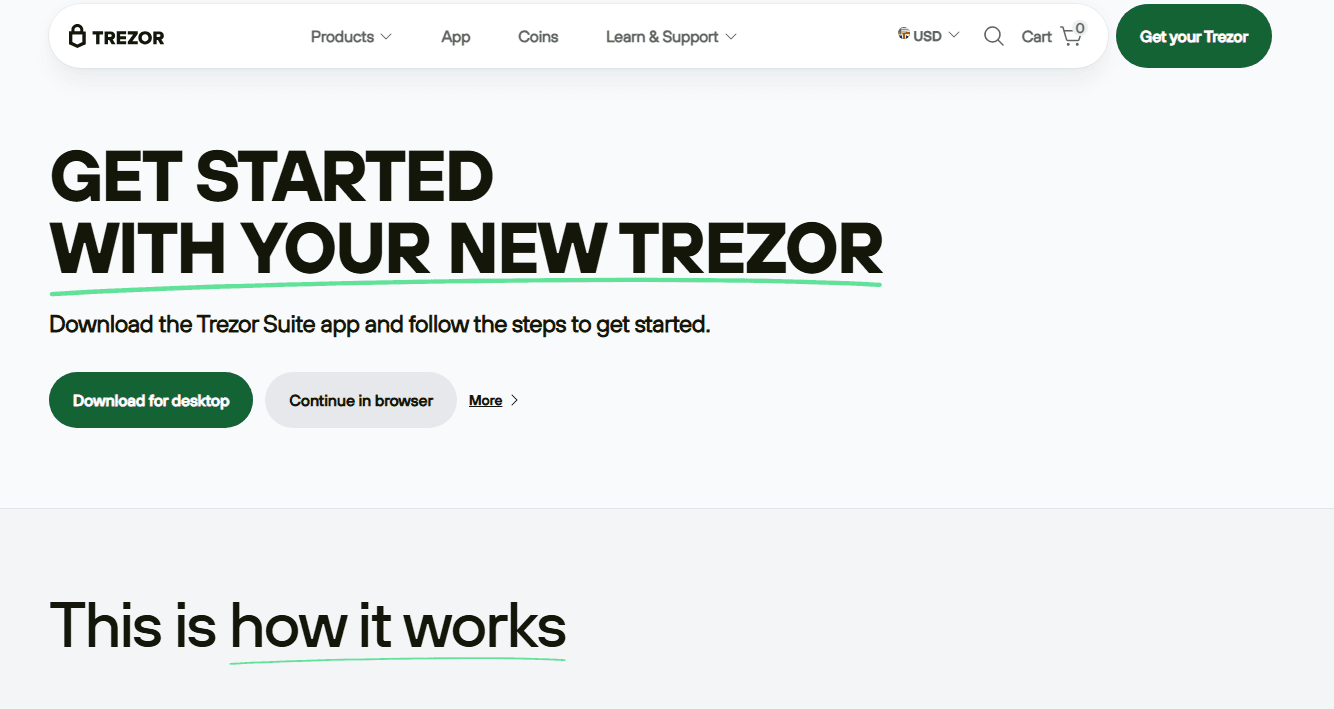
Trezor.io/start: The Definitive Guide to Secure Cryptocurrency Wallet Setup
Cryptocurrency has revolutionized the way people handle money. Unlike traditional financial systems, cryptocurrencies rely entirely on self-custody, meaning you, the user, are fully responsible for securing your funds. At the core of this security is the private key, a unique digital code that grants ownership of your assets. Lose it, or have it stolen, and there is no third-party recovery.
This is why Trezor hardware wallets have become one of the most trusted solutions for secure crypto storage. To ensure a safe and effective setup, Trezor provides Trezor.io/start, a dedicated platform that guides users through initializing their wallet while protecting them from phishing, malware, and other common threats. This guide explores Trezor.io/start in detail, from initial setup to advanced features, security practices, and best usage tips.
What Is Trezor.io/start?
Trezor.io/start is the official gateway for initializing your Trezor hardware wallet. It is a web-based platform that ensures users follow safe procedures while setting up their wallet for the first time. The platform provides:
Step-by-step instructions for connecting and initializing the device.
Official download links for Trezor Suite, the management software for your wallet.
Guidance on creating a secure PIN and storing the recovery seed.
Verification steps to ensure your device is authentic and untampered.
By starting at Trezor.io/start, users avoid phishing websites and unsafe tutorials, ensuring their crypto funds remain secure from day one.
Why Use Trezor.io/start?
Security in cryptocurrency is paramount. Unlike banks, there are no intermediaries to reverse transactions or recover lost funds. Trezor.io/start addresses these risks by providing:
Verified Setup Instructions: A safe, structured process for initializing wallets.
Official Downloads: Direct access to Trezor Suite and firmware updates.
Recovery Seed Guidance: Instructions on safely recording and storing the backup seed.
Device Authentication: Steps to confirm your Trezor device is genuine and untampered.
Using Trezor.io/start ensures users are following best practices in cryptocurrency security, reducing the risk of hacking or accidental loss.
Trezor Wallet Models Supported
Trezor.io/start supports both main Trezor hardware wallet models:
Trezor One:
Simple, reliable wallet with physical buttons.
Supports most major cryptocurrencies.
Ideal for beginners and casual crypto users.
Trezor Model T:
Premium wallet with a touchscreen interface.
Supports additional cryptocurrencies and tokens.
Enhanced security features and faster setup experience.
Both models are designed to store private keys offline, keeping sensitive data away from internet-connected devices.
Step-by-Step Wallet Setup
Trezor.io/start provides a structured setup workflow that ensures security at every step.
Step 1: Verify Your Device
Before connecting your Trezor:
Confirm packaging is sealed and untampered.
Check for all included accessories (USB cable, manuals).
Follow the verification instructions on Trezor.io/start to confirm device authenticity.
Step 2: Install Trezor Suite
Visit Trezor.io/start.
Download Trezor Suite for your operating system: Windows, macOS, or Linux.
Install the software following the provided instructions.
Security Tip: Avoid downloading Trezor Suite from third-party websites to prevent malware.
Step 3: Connect the Device
Plug your Trezor device into the computer using the provided USB cable.
Open Trezor Suite; the software will automatically detect your device.
Step 4: Initialize the Wallet
Trezor.io/start guides users to:
Create a new wallet or restore an existing one using a recovery seed.
Set a strong PIN code to prevent unauthorized access.
Record the recovery seed offline in a secure location.
Step 5: Confirm the Recovery Seed
Trezor.io/start instructs users to verify the recovery seed by selecting words in the correct order on the device.
This ensures the seed is accurately recorded, which is essential for restoring your wallet if the device is lost, stolen, or damaged.
Logging Into Trezor Suite
Once setup is complete:
Open Trezor Suite on your desktop or browser.
Connect the Trezor device via USB.
Enter your PIN code on the device.
Confirm that Trezor Suite recognizes your wallet.
Your wallet is now ready to send, receive, and manage cryptocurrencies securely.
Security Features Highlighted by Trezor.io/start
Trezor.io/start emphasizes the security layers built into the wallet:
Offline Key Storage: Private keys never leave the device.
PIN Protection: Prevents unauthorized physical access.
Optional Passphrase: Adds an extra layer of encryption for advanced users.
Physical Transaction Verification: All transactions require manual confirmation on the device.
Firmware Authentication: Ensures the device runs official firmware, reducing the risk of compromise.
These features collectively make Trezor one of the safest options for cryptocurrency storage.
Supported Cryptocurrencies
Trezor wallets initialized via Trezor.io/start support hundreds of cryptocurrencies, including:
Bitcoin (BTC)
Ethereum (ETH) and ERC-20 tokens
Litecoin (LTC)
Bitcoin Cash (BCH)
Dash (DASH)
Zcash (ZEC)
Integration with decentralized finance (DeFi) platforms also allows advanced users to explore blockchain applications securely.
Sending and Receiving Funds
Trezor.io/start ensures users understand secure transaction practices:
Sending Cryptocurrency
Open Trezor Suite and select the account to send from.
Click Send, enter the recipient address and amount.
Confirm transaction details on your Trezor device.
Approve the transaction to broadcast it to the blockchain.
Receiving Cryptocurrency
Select the account to receive funds.
Click Receive to generate a unique wallet address.
Verify the address on the device.
Share the verified address with the sender.
Verification on the device ensures malware cannot manipulate transactions, keeping funds safe.
Portfolio Management
Trezor.io/start guides users in using Trezor Suite for effective asset management:
Real-Time Balances: Instantly see the value of all holdings.
Performance Tracking: Monitor growth and portfolio allocation.
Multi-Account Management: Organize multiple wallets for different purposes such as personal, business, or investment.
These features provide clarity and organization for managing cryptocurrencies effectively.
Advanced Features
Trezor Suite allows access to advanced functionality:
Token Swaps: Trade cryptocurrencies directly within the Suite.
DeFi Access: Interact with decentralized finance applications safely.
Custom Transaction Fees: Adjust fees based on transaction speed or cost preference.
Multi-Account Organization: Separate funds for business, personal use, or investment purposes.
These features combine convenience with robust security.
Common Issues and Troubleshooting
Even with Trezor.io/start guidance, users may face challenges:
Device Not Detected
Cause: USB connection issues or outdated software.
Solution: Try a different port, reconnect, and update firmware and Suite.
Forgotten PIN
Cause: User cannot recall the PIN code.
Solution: After multiple failed attempts, restore the wallet using the recovery seed.
Transaction Delays
Cause: Network congestion or low fees.
Solution: Increase transaction fees or wait for confirmation.
Browser Compatibility Issues
Cause: Outdated browser or conflicting extensions.
Solution: Use the desktop Suite or a supported browser.
Best Practices
Trezor.io/start emphasizes several best practices to ensure asset safety:
Download Trezor Suite only from the official website.
Use a strong PIN and optional passphrase.
Store recovery seeds offline in a secure location.
Verify all transaction details on the device.
Keep firmware and Suite updated regularly.
Separate accounts for different purposes.
Avoid public Wi-Fi for wallet access.
Following these practices significantly reduces the risk of theft or loss.
Desktop vs Web Platform
Desktop Application: Offers offline security, multiple account management, and advanced features.
Web Interface: Convenient for quick access but requires careful browser verification.
Regardless of the platform, all sensitive operations require manual confirmation on the Trezor device, keeping private keys safe.
Conclusion
Trezor.io/start is the official and safest starting point for setting up a Trezor hardware wallet. It guides users through initialization, PIN and recovery seed creation, and device verification. Following its instructions ensures that cryptocurrency holders can:
Securely send, receive, and manage assets.
Track portfolio performance.
Access advanced features such as token swaps and DeFi interactions.
Protect funds using offline key storage and multi-layer security.